Barong Dance : The traditional and sacred dance from the island of Gods

Barong dance is one of Balinese dances and part of cultural heritage of pre-Hindu besides Sanghyang dance. Barong word comes from word of "bahruang" means bear, a mythological animal which has magical power and it's considered as the protector.

Mentawai, The Hidden Paradise From The West Sumatera

Mentawai archipelago is part of West Sumatra province where since 1999 has been appointed to be a regency. The position of the Mentawai Islands is in the middle of the Indian Ocean and it makes an awesome sea, surrounded by nature and perfect for marine tourism. Mentawai has become one of the most famous tourist destinations for adventure, cultural tourism, and marine tourism and especially surfing which is favored by local and international surfers.

Batik and its History : One of The Great Indonesian Masterpieces

Batik is one of the greatest Indonesian masterpieces. Batik has many admirers and the number is increased from time to time. Many international events today use batik since its uniqueness amazed many people.

Saman Dance : A miracle from the land of rencong (Aceh)

If you witness art and cultural show in international events, maybe you'll witness traditional dance of Aceh called Saman dance. Saman dance is one of interesting performing art from Indonesia, even Saman dance often staged as Indonesian dance ambassador in various international events.

Raja Ampat : Enjoy the real underwater paradise

Raja Ampat or "Empat Raja" is a name given for these islands. A name that comes from local myth. Four main islands are Waigeo island, Salawati island, Batanta island, and Misool island as producer of ancient rock painting. The underwater lovers around the world come to Raja Ampat to enjoy the best underwater scenery in the world.

Showing posts with label Sulawesi culture. Show all posts

Tuesday, September 30, 2014

Phinisi Boat : An impressive masterpiece of Bugis people


Phinisi, a traditional boat from Bugis and Makassar people, South Sulawesi, Indonesia. Phinisi boat generally has two main masts and seven sails. 3 sails is placed in front end of the boat, two in front, and the rest in back.

When you're sailing in the Indonesian oceans, you will meet with the incredible traditional boat. Phinisi has sailed to Malacca, Burma, Vietnam, and Australia for centuries. You can see the traditional boat anchored in Paotere harbour at Makassar, Sunda Kelapa harbour in Jakarta, Dermaga Ujung harbour in Surabaya, wood harbour in Kalimantan, and even in small harbour at Labuan Bajo, Flores.

Phinisi usually used for inter-island freightage in Nusantara (Indonesia today). Bugis and Mandar people which come from South Sulawesi is talented sailor and shipbuilders as well. Phinisi boat has brought Bugis people sailed in Nusantara archipelago until Java, Borneo, New Guinea, Sumatera and Nusa Tenggara. Bugis people wasn't only known as skilled shipbuilder but also as the dreaded pirates.

In 18th century when the dutch colonized Nusantara, many nobilities sailed into Malaysia and Borneo. Sultan of Kutai in East Kalimantan and Sultan of Johor and Selangor in Malaysia are the descendants of Bugis. The origin region of Bugis located in Luwu, Bone Gulf.

In 13th and 14th centuries, was the development age of the Kingdom of Bugis. One of the greatest manuscript of Bugis, which was written on the age was "I La Galigo". This manuscript contains 600 pages of stories about the origin of Bugis people and it's include Phinisi boat, which is firstly made by Sawerigading, Prince of Kingdom of Luwu, which is sailed to China and married Princess We Cudai. After few years in China, Sawerigading back to his motherland by using phinisi boat to Luwu. The boat hit by big sea waves when it almost arrived in Luwu waters and the boat split into 3 parts and stranded in Ara village, Tanah beru village, and Lemo-lemo village. The local people there assembled the wrecked boat to become a boat which now known as phinisi boat.

The weight of phinisi boat is about 100 to 200 tons and it's still has an important role as traditional transportation in inter-islands trade. In 19th century, the boat have been used to carry goods from Europe and China from Singapore to Dobo in Aru island, East Nusa Tenggara, which then anchored in every small docks along the route. From Indonesian archipelago, they collected paradise bird feathers, sandalwood, spices, golds, and  chili. They sold it with high prices to chinese and indian traders in Singapore

Nowadays, phinisi carries some small cargos contain logs, cements, tiles, rice, sugar, cigarettes, and even motorcycles for sale over the island. Phinisi equipped with tools for staying in the sea, which is needed by the divers. Today, it 's equipped with kitchen, cabin, bathroom and several diving expedition to National park of Komodo and Raja Ampat.

There're two kind of phinisi. The first named Lamba or Lambo, a modern phinisi equipped with the diesel engine (PLM). The second one is Palari, an earlier phinisi form with curved form and the size is smaller than Lamba.

Meanwhile, the modern Phinisi boat today has copied the 19th century old western sailboat. In addition, the large version of the previous Bugis boat known as Patorni boat or Padewakang boat.

Phinisi boat is one of traditional boat of Indonesia and it has own uniqueness in making process. Generally, like the westerner ships, a ship framework is made firstly before the ship wall. Meanwhile in phinisi, the process started at the ship wall and the ship framework for the next. You can find Phinisi in the southern coast of South Sulawesi, centered around Bulukumba in Tana Beru. Here you can witness impressive shipbuilding with traditional tools.
The construction of Phinisi

The construction of phinisi is the combination between science and old traditional experiences accompanied by stringent rituals that must be followed to ensure the safety on the sea. The boat craftsmen have to count good day according to their calendar to start for wood searching as raw materials. The wood are usually searched in the 5th day and 7th day of the moving moon. Number 5 (naparilimai dalle'na) means sustenance already in hands, meanwhile number 7 (natujuangngi dalle'na) means always get sustenance. After they decide and choose the good day, the headmaster of Phinisi project lead the wood searching. There's no draft or written notes to make Phinisi. The project leader already know everything about Phinisi construction and its detail.

Even though the boat craftsmen usually known as Bugis people, but they're divided into 4 sub-tribe. The fourth are Konjo in the south of South Sulawesi (Ara, Bimra, and Tanah Biru), Mandar in the West Sulawesi to the northern part of Makasar, Bugis located around Wajo, eastern part of Bone Gulf and Makassar around Makasar city. Konjo is the most influential tribe than 3 the others in making Phinisi boat.

The most famous expedition of Indonesian phinisi was the expedition of Phinisi Nusantara which have sailed to Vancouver, Kanada, it needs 62 days in 1986. In 1987, there was expedition called "Hati Marige", it used Padewakang boat (part of Phinisi family) to Darwin, Australia, and it used the classic route. The next was the expedition of Ammana Gappa to Madagascar island, and the last was Damar Segara expedition to Japan.

If we visit to Makassar city, around 5 km or less than 10 minutes from the harbour, then you will find a traditional dock named Paotere dock. Here you can see many Phinisi boats anchored.

You can use pedicab to go around into this dock. During down the road, you will see the old city of Makassar near the dock and the toll booth. In the edge of the toll, you will find fishermen settlement before reach the Paotere dock.

In Paotere dock, you will witness the fishermen carry the catch and also their activity on the trade center. Near the dock, you can do culinary tour especially for the culinary hunters such as seafood mixed with Makassar spice and many more. So don't forget to visit !!

More information about Phinisi, art and culture from Sulawesi, visit wonderful Indonesia
Thankyou for your visit :D

Monday, July 7, 2014

Keris : A powerful relic weapon from Indonesia


Keris is a short traditional weapon of Malay used since 600 years ago. The weapon is quite unique in Malay world  and it's available around Malay region such as Malaysia, Indonesia, Singapore, South Thailand, South Philippines (Mindanao) and Brunei. Keris is used for self-defense and also as the greatness equipment for the king. It's also as a symbol of the greatness of Malay people. The most famous keris is Keris Taming Sari which is used by Hang Tuah, a famous Malay hero.

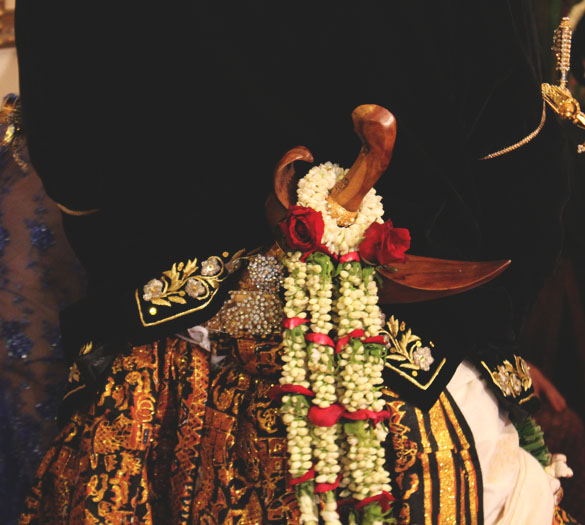
Keris originally from Java islands and the ancient keris has been used between 9th century to 14th century. This weapon consist of 3 parts : the eye of keris, the head, and the cover. Keris is often associated with a mystical power by the Malay people in the past. Somepeople believe that keris has its own power. Keris, according to Malay culture must be kept well by making a sacred ceremony for it on certain days such as in Thursday night. Another ways like pouring the citrus (lime) liquid into the keris as the way to keep the purity of its metal. In Central Java, generally, the groom in marriage ceremonies usually use complete javanese costume with keris placed in his waist. Why the groom uses keris as in a wedding party? Keris, in Javanese people is a symbol of manliness and superiority and sometimes when the groom can't attend the ceremony because of certain causes, he will be represented by a keris. Keris also as a symbol of the power.

Actually, the view of Keris started from the belief of the Javanese in the past. The source of the existence of the living creatures in the earth is come from agrarian philosophy, which is the merging of the elements of man and woman. In this world, God creates the living creatures (human, animals, or vegetation) in two different sex, a man and a woman. The belief on agrarian philosophy was very fundamental in the environment of Keraton (the term for a king's palace in javanese) such as Keraton Kasunanan Surakarta, Keraton Yogyakarta, and many more. At first, the belief is originally from Hinduism, which is followed by the Javanese in the past. Also appear some beliefs about Ibu Pertiwi - Bapa Angkasa as an integral part of javanese philosophy.

The belief of agrarian philosophy in the Javanese society is realized in the form of Kirab Pusaka (A ceremony for the relic items (include weapons) which have magical power), which is held before the date of one Suro in Javanese calendar. The relic items usually are sharp weapons like spear, big knife named "Bendho" and many more. The parade of the prime relic weapons of Keraton walk surrounding the complex of Keraton and at the same time, the carriers and the followers focusing their mind and feelings also praise and invoke to the Lord of the universe, invoke the Lord's protection, happiness, inner and outer well-being.

Here's a video about Kirab Pusaka. Wacth and enjoy it :D

The main function of the sharp relic weapons in the past were for self-defense against wild animal and enemy's attack or to kill the enemy. But at this time, the main function of it has changed. In the peace time, sometimes people use keris as a costume complement for the great ceremonies or in wedding party. So, Keris will be decorated with diamonds in the head part of keris. Even its cover made of beautiful carved metal, coated with gold as a pride. Keris also become one of high precious comodity.

The relic weapons isn't just about keris and javanese spear but also almost all regions in Indonesia have famous relic weapons such as Rencong from Aceh, Badik from Makasar, Trident, Balinese keris, and so on.

When Sultan Agung and his army attacked to Kadipaten Pati by the war title ; Garudha Nglayang, Supit Urang, Wukir Jaladri, or Dirada Meta, the soldiers who accompanied him used spears where it's carved with image of Kalacakra. The power of those relic weapons wasn't only from its materials like steel, iron, nickle, even it's mixed with meteorite stones but also its making was accompanied with prayers to God with a spiritual effort from the master. The spiritual power of God was believed by the people as powerful magical power so it will affect the opponents become more weak and terrified.

Once there was an opinion based on scientific test towards sacred keris and the result said that it expended invisible energy. Interestingly, keris which is used as a complement of javanese traditional groom dress is completed with the garland of roses and jasmines placed in the head of keris. It's not just a garnish, but it has meaning to remind the people not to be emotionally, wild, anger, act arbitrarily like Harya Penangsang's character.

The relation with Arya Penangsang is when Aryo Penangsang made war against Sutawijaya, because of Harya Penangsang was an anger, emotional, and uncontrolled, his stomach was punctured by Sutawijaya with the spear of Kyai Plered. His intestine already out of his torn stomach. In the condition wanted to revenge with full of rage, then he tied his intestine into the head of keris on his waist. He continuously attacked the enemy. At the time, when Arya Penangsang wanted to stab his enemy with keris of Setan Kober placed on his waist, when he unsheathe it, his intestine cut off by the eye of his keris. Arya Penangsang died in a great war that killed thousands soldiers. From that war, the idea of placing garland of flowers on the head of keris appear.

Relic weapons such as spear, keris, and many more, will inflict the incredible courage sense to its owner. The people know it as "PIYANDEL" means the enhancer of self-confidence, even the relic keris or relic spear, which is given by the King into royal nobleman contains the trust of the King. However, when the King's trust is tampered with the bad attitude of the royal nobleman, the relic keris can be asked back by the King.

The relation between keris with its cover especially by the Javanese is interpreted as intimate relationship, fused to reach the harmony of life in the world. This interpretation gave rise to a famous philosophy, "Manunggaling Kawula Gusti", unity between courtiers and the King, the unity between human and its creator, the unity between the people and its leader, makes life always more peaceful, happy, healthy and prosperous. In addition of mutual respect between each other, also have to know yourself in work according to portions and each function correctly. Nevertheless, the meanings contained in those relic weapons as art objects of national culture, which contains various aspects in the Javanese life today are threatened its development because of technology aspects is less enthused compared with legend and magical aspects.


The Recognition of Keris

After the recognition of wayang as world heritage in 2003, Keris has its turn on 25th November 2005 in Paris. The recognition of Keris as the world heritage is a fresh news in the midst of  adversity of Indonesia lately.

Keris, as well as Kabuki (Japanese theatre), and traditional show from India, Ramlila, which explain about Ramayana epic. Samba from Brazil and Mak Yong, a traditional form of dance-drama from Malay. They're still exist until now

Actually, there're 64 cultural heritages, which are proposed from several countries to be recognized as world heritage by the UNESCO. However, after going through the valuation from several juries which convene on 20 to 24 November 2005 where Putri Basma binti Talal from Jordania is choosen as the chairman, only 43 objects recognized as masterpieces of the oral and intangible heritage of humanity. Meanwhile, masterpieces which recognized by UNESCO from 2001 and 2003, include wayang, are about 47 in number. Thus, the total of world heritage masterpieces which recognized by UNESCO are 90 in number. Estimated, around hundred thousands dollars a year will be used to preserve Keris and Wayang.

"Through the momentum of the recognition from UNESCO, we should rearranging the view about Keris", Ir Haryono Haryoguritno said. He's one of the Keris expert, which lead research team in field and discussion for a year since August, 2004.

After attending Keris communities in Central Java, East Java, Madura, Bali, & Lombok, Haryono which accompanied by Waluyo Wijayanto from the association of keris enthusiast of Damartaji and an Indonesian lived in Australia, Gaura Mancacaritadipura, summarize their research in a thick report for UNESCO. Also submitted two films about keris culture with durations of 10 minutes and 120 minutes. While today, most mainstream media more often expose "negative views", which related to Keris, according to Haryono, Indonesia should realize that the world today appreciates the ancestral heritage of Indonesian, which in every opportunities always be ignored by Indonesian itself. "Keris nowadays, described in television and it can fly, shine, and closely with shamanism world" Waluyo said. Also layman, which is always connecting Keris with Mpu Gandring and Ken Arok where he killed Mpu Gandring through Keris he booked. Mpu Gandring cursed Keris he made, which actually unfinished and it cursed 7 offsprings of Ken Arok, include Ken Arok itself.

We have to admit that we're very far behind with Singapore and this country has used Keris as identity pride on their airline services. The airlines of this country like Singapore Airlines used name of Keris on their VIP waiting room, named Keris Lounge. Also KrisFlyer, a service for the one who often use airline services. KrisMagazine for their magazine name, and KrisShop for the service of souvenir sale in the plane.

Saturday, November 9, 2013

Pakarena dance : A dance that reflects the softness and politeness of South Sulawesi women.


Dance is one of beauty form, tucked in body motion, eyes, and the dancer emotions. Perhaps, these reasons make the parents give their daughter's name with "Tari" and "Utari" in Indonesia. The aesthetic of beauty of the dance can't be doubted anymore and it will make the dance lovers be amazed. According to historical record, the art of dance in Indonesia is born simultaneously as a media of cult and offerings to their gods. However, along with the development of main function, dance is not only as a media of cult but also entertainment media.

Pakarena dance comes from Gowa regency, Makassar, South Sulawesi. In Gowa language, 'Pakarena' comes from word of 'Karena' that has the definition of 'Main' whereas affix of 'pa' means 'the performers'. Pakarena dance is always danced by royal family of Gowa as a form of love to Sultan Hasanuddin (the 16th King of Gowa)

There's nobody knows exactly about the origin of this dance but the story that develop in the peoples of Gowa tells us that Pakarena dance comes from a myth, which tells two inhabitants of different lands, boting langi (from the kahyangan land) and inhabitant of lino (from the earth). Told that when the two lands were ready to be separated, boting langi taught lino inhabitants about the way of life start from how to grow crops, how to build and nourish husbandry until the ways to hunt the animals through the motions of hand, body, and foot. At the end, as a gratitude expression of the inhabitants of lino to the inhabitants of boting langi, the inhabitants of lino combined every motions becomes a dance named Pakarena dance. 

Pakarena Dance has beautiful aesthetic movement that you can see in every hand motion and foot motion. In the show, the dance is always accompanied by two tambours, kannong-kannong, gong, kancing, and a pair of puik-puik / tuip-tuip (flute) that is played by music players (7 men). To hit the drum, the players usually use drumsticks or "bambawa" that is made from buffalo's horn and also use both hands. The sound of the drums implies the strong character of South Sulawesi men. In other versions, the dance is also accompanied by song.
Puik - puik / tuip - tuip
Dance of pakarena is played by 4 until 7 women and the dancer must be woman. Why? Because of the dance, basically reflect the characteristic of Gowa women like soft, polite, faithful, and obedient. They accompany the beauty of pakarena dance by bright costume by the colours of red, white, light green, and yellow. The complete costume consist of 'baju pahang' (made of woven), lipa 'sa' be (typical silk sarong from South Sulawesi), and jewelries like necklace, bracelet, bun, and big size fan.

Dance of pakarena is divided into 12 parts and it takes the time until one hour. Every motions implies particular meanings. The early motion is started by little sitting position and then rotates clockwise, this motion describe about human's cycle life. Then it's followed by up and down movements, reflect the wheel of human's life where sometimes it can be in bottom (in dismal condition) or sometimes in above (in happy). Perhaps, when you witness this dance or another dance, every movement is only a usual movement as a typical part of a dance but now you need to know that behind the motions, it implies the meanings, story, and message to be delivered.

For the people of Goa and Makassar, this dance is already become a part of life and as a reflection of ideology. The dance is also as a media that is connecting them to God. The beauty of pakarena dance should be conserved and enjoyed because of its meanings. 

When you visit to Goa regency, Makassar, make sure you witness the sacredness the beauty of the dance. Don't be worried to find the show place of the dance because of many dance studio (sanggar tari in Indonesian) that you can see and visit in Makassar.

Here an example of video of pakarena dance. Make sure you watch and enjoy it :D


Yap, that's all about Pakarena dance : A dance that reflect the softness and politeness of South Sulawesi woman. More information about Pakarena dance and art and culture from South Sulawesi, please visit Wonderful Indonesia

Thankyou for your visit :)

Enter your email address:

Delivered by FeedBurner