Barong Dance : The traditional and sacred dance from the island of Gods

Barong dance is one of Balinese dances and part of cultural heritage of pre-Hindu besides Sanghyang dance. Barong word comes from word of "bahruang" means bear, a mythological animal which has magical power and it's considered as the protector.

Mentawai, The Hidden Paradise From The West Sumatera

Mentawai archipelago is part of West Sumatra province where since 1999 has been appointed to be a regency. The position of the Mentawai Islands is in the middle of the Indian Ocean and it makes an awesome sea, surrounded by nature and perfect for marine tourism. Mentawai has become one of the most famous tourist destinations for adventure, cultural tourism, and marine tourism and especially surfing which is favored by local and international surfers.

Batik and its History : One of The Great Indonesian Masterpieces

Batik is one of the greatest Indonesian masterpieces. Batik has many admirers and the number is increased from time to time. Many international events today use batik since its uniqueness amazed many people.

Saman Dance : A miracle from the land of rencong (Aceh)

If you witness art and cultural show in international events, maybe you'll witness traditional dance of Aceh called Saman dance. Saman dance is one of interesting performing art from Indonesia, even Saman dance often staged as Indonesian dance ambassador in various international events.

Raja Ampat : Enjoy the real underwater paradise

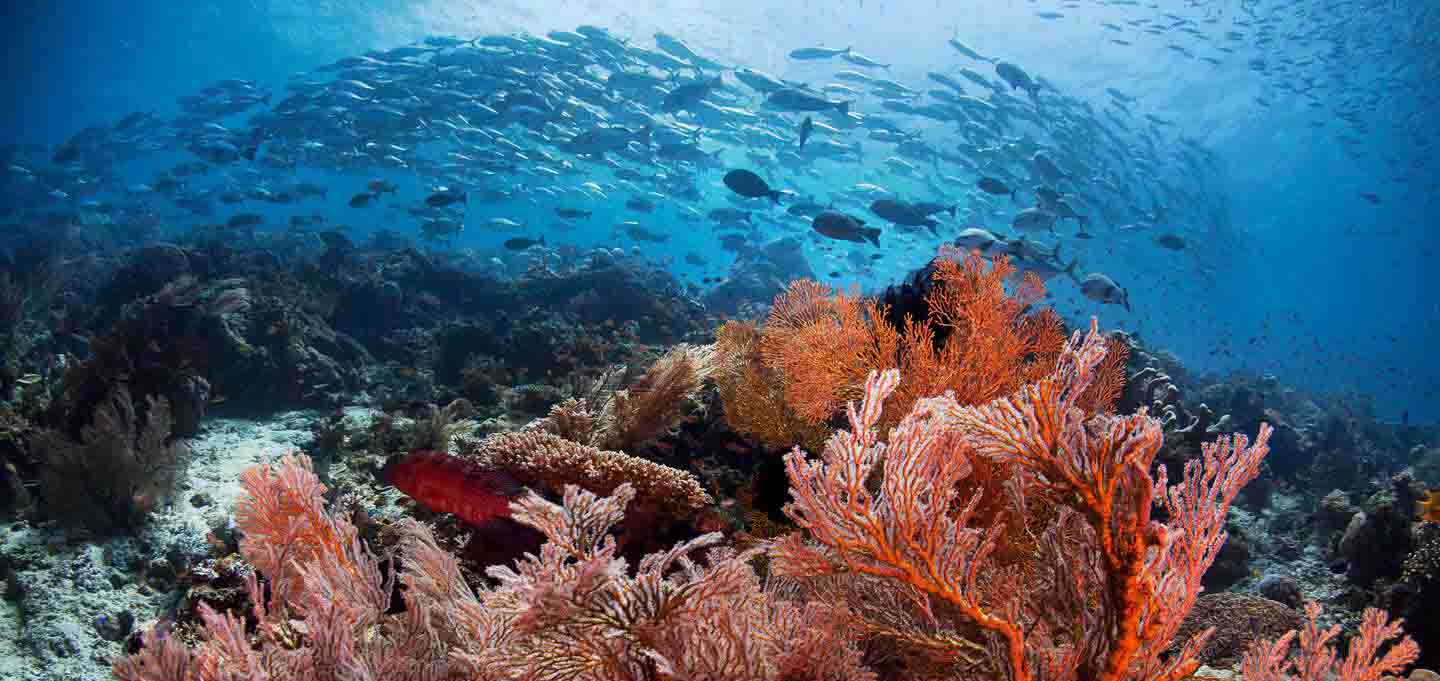
Raja Ampat or "Empat Raja" is a name given for these islands. A name that comes from local myth. Four main islands are Waigeo island, Salawati island, Batanta island, and Misool island as producer of ancient rock painting. The underwater lovers around the world come to Raja Ampat to enjoy the best underwater scenery in the world.

Sunday, July 5, 2015

My Tracks : Track your journey

I'll tell you a bit of my experiences during my holiday in Malang, East Java. I have a plan to visit Balekambang Beach. What makes me curious about this place is when I read from an article that Balekambang Beach has a similar uniqueness with Tanah Lot. I thought that Tanah Lot is the only one who has a temple in the top of the cliff surrounded by the sea but I'm wrong. So day by day, I collected some money to rent a car and buy some snacks to make my day joyful. I never thought that I will have a trouble about the route to Balekambang Beach.

The day has come, and I started my journey to Balekambang Beach. There's no problem untill the next 45 minutes. Everything was clear and alright, there's no a road diversion until I got a traffic jam for 30 minutes for the unreasonable reasons. Some said that there's a traffic accident occured 10 km from my position. The time shows at 01.00 PM, and it still needs 1,5 hours (in a normal route) to reach the destination. I decided to choose another route, which is explained by the people there. At first, I followed their words until then I got confused because the different explanation I got from people I met there. At this situastion, I picked up my Android, then I opened google chrome to find an article which explain the way to Balekambang Beach. Unfortunately, I didn't find what I was looking for. But then the next artcile I read explain about an application which can be downloaded from my Android. 

God Bless Me!! 

I found a solution to solve any routes problem which is expereienced by any travelers around the world. Yes, the App is called My Tracks.
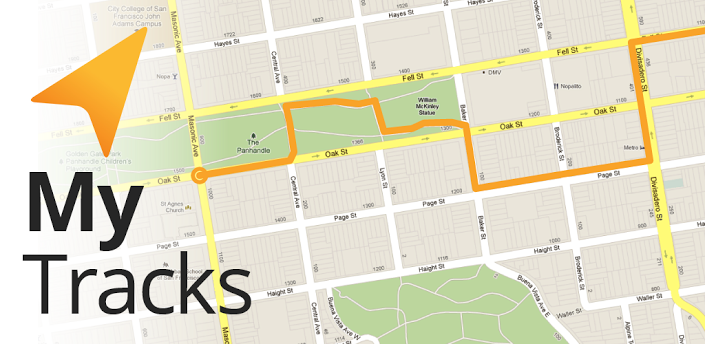


This App will allow you to record your tracks from one place to another place. It's very usefull when you don't know the location or you have a short memory to remember the route, as same as me hahaha. This App also allow you to record without no internet connection but the map will become blank with no road and its names appear. But when you then connect to your internet connection, it will adjust the route with the availabe road on the map.

Unfortunatelly, I just use this app only once since I downloaded it. If you need a further information and how to use the App, you can read this one My Tracks

or if you better learn from a video, here's a video that can help you how to use it well.
Monday, June 22, 2015

Tari Piring : From a plate become a great and awesome dance


Beside of many natural tourism object, West Sumatra also has tourism art that'll make you impressed. One of them is Tari Piring. In recent years, Government of West Sumatra establish Tari Piring as one of main art tourism in West Sumatra.
To make you impressed, here I show you a video of Tari Piring. Enjoy it ! :D
Tari Piring comes from West Sumatra, exactly in Solok. At first, Tari Piring danced by man and woman to give offerings to their gods as an expression of thankfulness who bless the farmer with a good harvest. They're dancing and holding the plate in their palms simultaneously and it's very agile. There's three variation of motion in Tari Piring such as Tupai Bagaluik, Bagalombang, and Aka Malilik. 
However, as Islam came to Nusantara, the purpose and the meanings of this dance change into a dance which then shown in marriage ceremony, not as a dance to celebrate and worship their Gods. Change also appear in the dancer composition, where the composition of Tari Piring nowadays consist of all women, no men included. I'm sure you'll not believe that the dancers dance with fast and attractive motions, powerful, full of spirit and very beautiful. No plate fall while they dance. The dance started with the dancers who move according to the dance choreography by placing the plate in their own hands with no fall or even shifted, it's perfectly awesome and amazing.
The atmosphere become lively with the music instruments accompany the dance motions such as Talempong and Saluang. The dancer costumes generally use bright colour to support the festive atmosphere of the event. You'll listen typical rhythm created from plates and rings which are held and used by the dancers. Next, in the middle of the show, get ready to watch a throwing plates attraction. The plates which is held by the dancer will be thrown very high into the sky and later its pieces will be trampled by the dancer with the dance motion continuously. It describe expressions of joy and thankfulness of a good harvest given by God. Amazingly, the dancer won't ever get any injuries even they use no footwear. Generraly, the dancer composition consist of three, five, or seven dancers (must be odd numbers).
Tari Piring is well-known its uniqueness to the whole world. The dance has been danced and staged beyond West Sumatra such as Jakarta, Medan, Pekanbaru, and many more. It also has been staged in event of tour festival of Nusantara cultures and ever staged in another countries as part of Nusantara tour festival in Malaysia, Singapore, Serbia, and some countries in europe.


Saturday, May 23, 2015

World Lens : Can't understand German, Russian, Spanish, or even English? Don't worry!


Have you ever speak beside using your native language? Not yet ? So do I :D. Actually, I only can speak 2 languages, first is Indonesian, the other one is English, but english isn't enough for traveling to the entire of the world. There's another country where the local people there mostly use their local languages, besides english as a second language.

It could be worse if you wanna travel to a country where the people can't speak english instead of their local language. It can be happen anywhere and anytime. It'll become a disaster if the country doesn't provide road signs which has signs with english. Then, what'll you do if the things become a real? Ask the local people there? 50:50, they might be understand your question / permission, but some might be don't. Ask the policeman or the officer? Yes they might bring you to your destination, but how if there's no policeman or local officer there? Sounds terrible, doesn't it ?

Don't worry my friends, there's still a light (hope) that'll bring you to the heaven (your travel destination). It will not make you worry to travel to the favorite country such as Germany, Russia, Spain, I have tried it and it's amazing. Now you don't need to confuse of foreign languages that make you piss off and your head burned. Just open the app, then you'll directed to the menu and choose language you need translated. 

Yes, the app name is World Lens. You can download it on Playstore or Apple store. It support for English, Germany, Spanish, Russian, French, Italian, Portuguese, and many more. Its size only 45,23 MB after installing the app. You just need to open the app, place your camera into the english/spanish/ or etc sentences you need to translate, then it'll translate automatically into your language (at first you need go to the option menu to choose the language). Can't believe it? Doesn't make a sense? here's a video for a proof!!


What're you waiting for? Just download it and there'll be no more obstacles in travelling to the entire of the world. :D
But I recomend you to learn foreign language instead of using this app continuously. We can do anything if we have learned foreign languages instead of using app that will make us lazy in learning, right ?

Be wise use the app, thx for your visit and happy travelling :D

Tuesday, May 12, 2015

Ngaben : A cremation full of great philosophy (Part II)

Ngaben isn't always identified as a big ceremony, according to the search of several Lontar in Bali. Some types of Ngaben are even simplest for example Mitrayadnya, Pranawa, and Swasta. However, there are also some big Ngaben ceremony such as Sawa Prateka and Sawa Wedhana. Here the types of simple Ngaben, as follow :

Mendhem Sawa 
Mendhem sawa means corpse burying. It's already explained in the first page that Ngaben in Bali could be deffered for a while by the reasons mentioned above. But there's another philosophical reasons though it hasn't been found in Lontar yet. Perhaps, it's kind of pretexts associated with philosophical background of the existence of this life. The reason is where the ragha sarira (spirits) which comes from prthiwi element (earth), bow to the mother earth. Ethically, it's described in order to the spirits meet and  greet with the mother earth. But, principally every corpse must be cremated. For those who still need a time (waiting for a good day : dewasa ayu ), the corpse (sawa) must be burried first.

Ngaben Mitra Yajna 
Ngaben Mitra Yadnya comes from word pitra and yadnya. Pitra means ancestors, Yadnya means a holy sacrifice. This term is used to mention kind of ngaben taught in Lontar Yama Purwana Tattwa. Ngaben, based on Lontar Yama Purwana Tattwa is a command of Gods Yama. To differentiate with another simple Ngaben, so it's called as Mitra Yadnya. The implementation of the cremation is based on the provision of lontar Yama Purwana Tattwa, especially about the ceremony and it's implemented in 7 days without using Dewasa Ayu.

Pranawa Pranawa 
Pranawa Pranawa is a kind of ngaben which uses sacred letters as a symbol of the corpse, where the corpse which has been buried for 3 days before the ngaben ceremony will be held a ceremony called as Ngeplugin or Ngulapin.  

Swasta  
Swasta means lost or disappear, is a kind of Ngaben without corpse, the corpse are invisible, buried in a long time, die in a far place, and many more. The corpse will be symbolized with a crock as skin, 12 threads as muscle, water element as meat (body), 18 Balung cendana (prayer beads), pranawa as sound, thatch as mind, recafana as blood vessel, and Om Kara symbol. 3 days before cremation, Ngulapin ceremony will be held. For those who die in a far and unknown places, Pengulapan (Ngulapin) will be held in a crossroads. For those who already buried in an unknown place, Pengulapan (Ngulapin) will be held in Pura Dalem. 
Generally, series of Swasta could be consist of the following : 


  1. Ngulapin, Ngulapin has a meanings to call the soul. This ceremony held also when the people die outside of their home (such as : hospital and etc). The ceremony held in many different ways depend on the local tradition. Some will hold the ceremony in the cross road, t-junction, or in the local cemetery.
  2. Nyiramin/Ngemandusin, It is a ceremony to clean up the corpse, this ceremony usually held in front of the courtyard. On this process is also accompanied with symbols like jasmine in the nasal cavity, piece of glass on the eyes, azadirachta indica (neem leaves) in the eyebrow, and another equipments with aims to release back the functions of the corpse's body back to its owner (God). Also it aims if the souls experience reincarnation back, the souls will be blessed with the normal bodies.
  3. Ngajum Kajang, Kajang is a white paper written with sacred words by the priest (Pemangku in balinese) or the local leaders. Next the relatives of the corpse held a ceremony called Ngajum Kajang by pressing the Kajang three times as a symbol of steadiness of their heart and mind about the death of their beloved person. It's also a symbol to unite the relatives so the souls will be in His realm faster.
  4. Ngaskara, Ngaskara means purify of the souls. This process is held in order the souls united with God and become a guide of their relatives which still alive in the world. 
  5. Mameras, Memerasa, comes from word "Peras" means success. This ceremony held if the corpses has grandchild, that grandchild will lead the souls through prayers and better karma they did.
  6. Papegatan, Papagetan comes from word "Pegat" means disconnected. The meanings of this ceremony is to disconnect the wordly ties and love between the souls and the relatives. because it will hinders the souls journey to the God. By this ceremony, symbolically the relatives are sincere, releases the farewell of the souls into a better place (His Realm).  The ceremony tool is offerings, which is arranged on a stone and above the offerings filled with 2 tree branches of Erythrina variegata formed like a gate and white yarns stretched to that 2 tree branches. Later, the yarns will be cutted off by the relatives before  they go out. 
  7. Pakiriman Ngutang, After Papagetan held, next will be continued with Pakiriman Ngutang where the corpse will be ushered into a local cemetery. The corpse will be placed on the Panchaka (like a high tower). From the funeral house, the local people will bring all tools and offerings of Ngaben together with the corpse accompanied by Baleganjur (balinese typical music). On its way, the Panchaka will be rotated  three times counterclockwise which means as a symbol to return the elemens of Panca Maha Butha to their own places. This rotation also means : rotate three times in front of the funeral house as a farewell symbol with the family members. Rotate three times in the crossroad and T-junction become a farewell symbol with the villagers and rotate three times in front of the cemetery means a farewell symbol with this world.
  8. Ngeseng, Ngeseng, a ceremony to cremate the corpse. The corpse will be laid in an available place, placed with offerings with philosophical meanings, then sprinkled with holy water (Tirta Pangentas) accompanied with holy spell from the priest (Pemangku / Mpu / Rsi). After then, the corpse will be burned completely,the bones as the rest of cremation ceremony will be crushed and assembled back in a coconut which its water already thrown out.
  9. Nganyud, Ngayud means ritual to sweep out all dirts inside of the soul of the dead one. The ritual usually symbolized by spread the corpse's ash into the sea or river.
  10. Makelud, Makelud usually held 12 days after the cremation ceremony. The meanings of this ceremony is to clean and purify the funeral family's environment from the sorrow of their beloved one who leave the world. It also has philosophical value where 12 days taken from Mahabharata when Pandawa sentenced isolate themself in a forest for 12 years. 

More information about Ngaben, please visit : Ngaben
Thank you for your visit :D

Friday, December 12, 2014

Ngaben : A cremation ceremony full of great phylosophy (Part I)


Bali, one of provinces in Indonesia which has many hindus and surely, they believe in spirits existence. According to the local people there, a person who has died, their spirits will leave their physical bodies which will be destroyed by the nature but their souls doesn't. They have special ceremony which called as Pitra Yadnya where the sequence of this ceremony usually called as Ngaben / Pelebon / Pralina, etc, and of course the ceremony levels are adapted with someone's level and position in society.

Ngaben, generally defined as cremation of the corpse, but that's not exactly right because of there's one of tradition in Ngaben which there's no cremation ceremony. Ngaben comes from word "Beya" means cost or stock ("biaya" or "bekal" in Indonesian), word "beya" in active sentence become "meyanin". Word meyanin has become standard language for Sawa Wadhana ceremony. It's also called as Ngabeyanin, then this word pronounced simply become "Ngaben". Ngaben or Meyanin in another standard term which is mentioned in Balinese literature called "Atiwa - Atiwa". No one knows the origin of word "Atiwa", but it's predicted come from the native language of Nusantara at past (Austronesian). The similar ceremony also occur in Dayak called "Tiwah" or in Batak which is called as "Tibal".

Ngaben or Meyanin or Atiwa-Atiwa, for the hindus in Tengger mountains known as "entas-entas". Word "entas" reminds us about the inseparable element from Ngaben ceremony in Bali named "Tirta Pangentas" which has function to release the relation between Atman (spirits) and their bodies and take them into the "Alam Pitara (afterlife). In polite balinese, Ngaben can be called as Palebon which comes from word "Lebu" means "Pertiwi" (earth). So, Palebon means to become the earth or in the other words, it means to unite by the earth. There's two ways to unite by the earth, by burning the corpse or by burying it into the ground, but the burning process is the fastest way. An object called "Pemasmian" is like a high tower (or it can be a chariot drawn by two cows), which has function as a corpse carrier and it will be burned together with the corpse. A place called "Sema" or "Setra" will be a vast field to burn the "Pemasmian" and the corpse inside.

Generally, the purpose of Ngaben are to process the return of Pancha maha bhuta into  the universe and to escort the soul into the realm of the spirits by releasing their affection with their bodies. By releasing the affection between the souls and its bodies, they can back to their realm, the realm of the spirits (in balinese called as Alam Pitra = the realm of the spirits). The process of Ngaben can't be delayed. It means after the bodies died physically, they must be cremated (Ngaben). Hindus in India have implemented this method in a long long time ago where in a very short time the corpse can be cremated, there's no complicated ceremonies, only need Panchaka as a place to lie the corpse, fragrant firewoods, and the holy spells and songs from Veda. 

Hindus in bali follow this ritual in principal. But they give some alternative such as : assemble the relatives, waiting for a good day (in balinese means Dewasa Ayu) according to the balinese calendar, but may not more than one yearBut actually, by using simple kind of Ngaben which has been stated in Lontar, Ngaben can be held anytime and anywhere in any circumstances. Meanwhile you need one year before make a cremation ceremony (Ngaben), sawa (the corpse) must be buried in a local cemetery. In order to avoid any undesirable things, a ceremony made for the corpse by using tirta pangentas (holy water for the corpse) and the process  of the return of Panca Maha Bhuta elements, especially Phrtiwi (earth) element, will run on this ceremony. 

Ngaben always identified in negative connotation (an extravagance), while you don't have enough money, you can't do a Ngaben. So that's why many negative opinions appear to the surface, one of the opinions is word "Ngabehin" comes from word "Ngaben" (an excessive). This assumption turns into a paradigm. At the end, many hindus in Bali can't make Ngaben because of lack of money and make the corpse buried in cemetery for many years. It's contra with the provitions stated on Lontar.
     
-Continued to the Part II -

Tuesday, November 4, 2014

List of Cheap Hotels around Malioboro, Yogyakarta

My friend told me that he had a new job as an "ojek" or the so-called the taxi driver, which he has ushered his clients and looking for hotels around Malioboro as a place to stay overnight or just take a rest. According to his experiences, he has many information about hotel and its facilities and rent price. As an integral part, I make this post to help all of you who wanna travel or holiday to Yogyakarta, especially Malioboro.

Here list of some hotels around Malioboro, Yogyakarta including the rent price and its facilities.

SOSROWIJAYAN
The first alley from Tugu station, near street Pasar Kembang


Hotel MERBABU
Address : Jl. Sosrowijayan Gang. I Yogyakarta 

Contact number : -

Rp 120.000 (Economy class with Fan, Breakfast)
Rp 150.000 (Standart class with Fan, TV, Breakfast)
Rp 200.000 (Deluxe class with AC, TV, Breakfast)
Rp 270.000 (Deluxe Plus class with AC,TV,Hot Water, Breakfast)
Rp 350.000 (Family Room class with AC, TV LCD, Hot Water, Breakfast)

LOSMEN ISTI

Address : Jl. Sosrowijayan Wetan Gang.II GT I/165, Yogyakarta 
Contact number : (0274) 7488366

Rp 75.000 (Fan with otside bathroom)
Rp 85.000 (Fan with inner bathroom)

Indonesia Hotel

Address : Jl. Sosrowijayan No.9
Contact number : 587659

Rp 100.000 (Economy class : Fan, Breakfast)
Rp 125.000 (Standart class : Fan, TV, Breakfast)


Hotel Gloria Amanda
Address : Jl.Sosrowijayan 195.
Contact number : 565286

Rp 175.000 (Standard class with Fan TV
Rp 300.000 (Deluxe class TV AC
Rp 325.000 (Deluxe Twin class TV AC
Rp 400.000 (Family Room Triple class)
Rp 450.000 (Family class with Bar)

Oryza Hotel

Address : Jl.Sosrowijayan 49-51.
Contact number : 512495

Rp 100.000 (Fan with outside bathroom)
Rp 110.000 (Single Bed + AC with outside bathroom)
Rp 130.000 (Double Bed + AC with outside bathroom)
Rp 200.000 (Double Bed + AC with inner bathroom)

Rama Hotel

Address : Jl.Sosrowijayan 16.
Contact number : 512885

Rp 100.000 with (Fan)
Rp 200.000 with (AC + TV)
Rp 250.000 with (AC + TV + Hotwater)

Monica Hotel

Address : Jl.Sosrowijayan 192.
Contact number : 580598

Rp 127.000 (Standard class with Fan)
Rp 165.000 (Deluxe class with Fan)
Rp 232.000 (Deluxe class with AC)
Rp 262.000 (Executive I class)
Rp 345.000 (Executive II class)
Rp 232.000 (Family Triple class)

Karunia Hotel

Address : Jl.Sosrowijayan 78.
Contact number :565057

Rp 100.000 (Fan with outside bathroom)
Rp 120.000 (Fan with inner bathroom)
Rp 200.000 (AC with inner bathroom)

Malioboro Inn

Address : Jl.Sosrowijayan 23-25
Contact number : 561705

Rp 350.000 (Standart Double)
Rp 450.000 (Deluxe Room)
Rp 550.000 (Family Room)

Kartika Hotel

Address : Jl.Sosrowijayan 8.
Contact number :562016

Rp 85.000 (Fan with outside bathroom)
Rp 100.000 (Fan with inner bathroom)

Family Homestay
Address : Jl.Sosrowijayan 47.
Contact number : 515010

Rp 250.000 (Double Bed TV)
Rp 265.000 (Twin Bed TV)
Rp 310.000 (Double TV Minibar)
Rp 320.000 (Double TV Minibar)
Rp 330.000 (Double TV Balkon)
Rp 345.000 (Double TV Minibar Bathub)

DAGEN
In the middle of Malioboro street.

Hotel Amarta
Address : Jl. Dagen 12.
Contact number :512628

Rp 150.000 (Single Fan, TV)
Rp 190.000 (Double Fan, TV)
Rp 200.000 (Single AC, TV)
Rp 260.000 (Double AC, TV)
Rp 325.000 (Triple AC, TV)

Ameera Boutique

Address : Jl. Dagen 13-15.
Contact number :580634

Rp 247.000 (Standart class with Single AC, TV)
Rp 277.000 (Superior class with Double AC, TV)
Rp 307.000 (Deluxe class with  Double AC, TV)
Rp 337.000 (Executive class with  Double AC TV)
Rp 367.000 (Suite class with  Double AC, TV)

Wisma Persada
Address :
Jl. Dagen 06.  

Contact number :563780 

Rp 250.000 (Standart  class with Double AC, TV)
Rp 350.000 (Family  class with Triple, AC, TV)
Rp 100.000 (Driver Room)

Hotel Punto Dewo
Address :
Jl. Dagen 46. 

Contact number : 6655178 

Rp 90.000 (Double Fan)
Rp 150.000 (Double AC + TV)

Hotel Sala.4 Dagen
Address :
Jl. Dagen 48. 

Contact number :580600 

Rp 110.000 (Double Fan + TV)
Rp 135.000 (Double AC + TV)
Rp 165.000 (Triple AC + TV)
Rp 250.000 (Family AC + TV)

Losmen Family
Address : Jl. Dagen 14.

Contact number :512774 

Rp 80.000 (Single Fan)
Rp 85.000 (Single Fan)
Rp 95.000 (Single Fan)
Rp 100.000 (Single Big Bed)
additional : + Rp 15.000 (TV)

Hotel Permata
Address : Jl. Dagen 64. 

Contact number :518117 

Rp 285.000 Standard  class with Single AC + TV
Rp 300.000 Standard  class with Twin AC + TV
Rp 355.000 Deluxe  class with Single AC + TV
Rp 365.000 Deluxe class with  Twin AC + TV
Rp 555.000 Permata Suites class

Hotel Kristina
Address : Jl. Dagen 71A. 

Contact number :512076 

Rp 150.000 Single AC + TV
Rp 180.000 Single AC + TV + Hotwater
Rp 200.000 Double AC + TV
Rp 230.000 Double AC + TV + Hotwater
Rp 250.000 Double AC + TV + Hot Water + Refrigerator
Rp 300.000 Double AC + TV + Hot Water + Refrigerator
Rp 350.000 Triple AC + TV + Hot Water + Refrigerator

Hotel Blue Safir
Address : Jl. Dagen 18-22. 

Contact number :562589 
Rp 200.000 Superior class
Rp 325.000 Deluxe class
Rp 430.000 Suite Room

SOSROKUSUMAN
( An alley in the next of Malioboro Mall)

Hotel IntanAddress : Jl. Sosrokusuman 

Rp 110.000 : economy class(fan, 2 beds  with Outside bathroom)
Rp 150.000 : standard class (fan, Tv, Double bed with inner bathroom)
Rp 220.000 : Deluxe class (AC, TV, king size bed with inner bathroom)

Hotel Puri
Jl. Sosrokusuman No. 22. 

Contact number : 514107Rp 50.000 Single Bed Fan with outside bathroom
Rp 70.000 Double Bed, Fan with outside bathroom
Extra TV = Rp 20.000
Extra Bed = Rp 20.000

WHW Hotel
Address : Jl. Sosrokusuman

Rp 50.000 Single Bed with outside bathroom
Rp 60.000 Double Bed with outside bathroom
Rp 70.000 Double Bed, Fan with outside bathroom
Rp 90.000 Triple Bed, Fan with outside bathroom ( for three people )
Rp 100.000 Double Bed Fan with inner bathroom
Rp 110.000 Triple Bed, Fan with inner bathroom ( for three people )

Prambanan Guest House
Address : Jl. Sosrokusuman No. 111. 

Contact number : 0274 - 557594

Rp 100.000 (Double Bed with Fan & outside bathroom)
Rp 125.000 (Single Bed, Fan)
Rp 150.000 (Double Bed, Fan)
Rp 175.000 (Triple Bed)
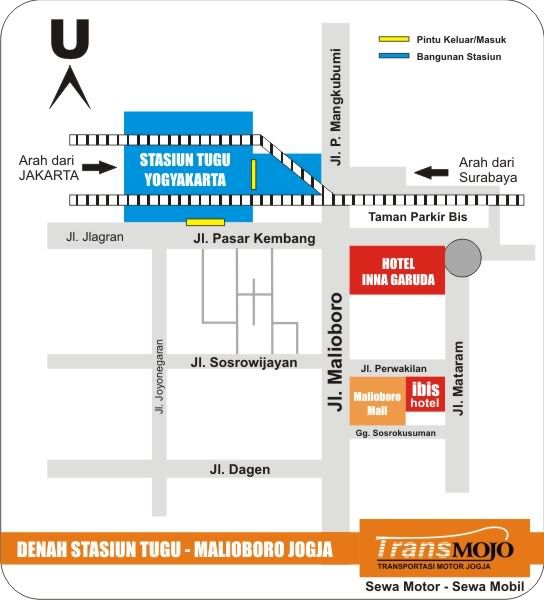
If you confuse of the location, try to look at this simple map.


Source : http://goo.gl/tB3gLx
May be helpful and thankyoy for your visit :D

Tuesday, September 30, 2014

Phinisi Boat : An impressive masterpiece of Bugis people


Phinisi, a traditional boat from Bugis and Makassar people, South Sulawesi, Indonesia. Phinisi boat generally has two main masts and seven sails. 3 sails is placed in front end of the boat, two in front, and the rest in back.

When you're sailing in the Indonesian oceans, you will meet with the incredible traditional boat. Phinisi has sailed to Malacca, Burma, Vietnam, and Australia for centuries. You can see the traditional boat anchored in Paotere harbour at Makassar, Sunda Kelapa harbour in Jakarta, Dermaga Ujung harbour in Surabaya, wood harbour in Kalimantan, and even in small harbour at Labuan Bajo, Flores.

Phinisi usually used for inter-island freightage in Nusantara (Indonesia today). Bugis and Mandar people which come from South Sulawesi is talented sailor and shipbuilders as well. Phinisi boat has brought Bugis people sailed in Nusantara archipelago until Java, Borneo, New Guinea, Sumatera and Nusa Tenggara. Bugis people wasn't only known as skilled shipbuilder but also as the dreaded pirates.

In 18th century when the dutch colonized Nusantara, many nobilities sailed into Malaysia and Borneo. Sultan of Kutai in East Kalimantan and Sultan of Johor and Selangor in Malaysia are the descendants of Bugis. The origin region of Bugis located in Luwu, Bone Gulf.

In 13th and 14th centuries, was the development age of the Kingdom of Bugis. One of the greatest manuscript of Bugis, which was written on the age was "I La Galigo". This manuscript contains 600 pages of stories about the origin of Bugis people and it's include Phinisi boat, which is firstly made by Sawerigading, Prince of Kingdom of Luwu, which is sailed to China and married Princess We Cudai. After few years in China, Sawerigading back to his motherland by using phinisi boat to Luwu. The boat hit by big sea waves when it almost arrived in Luwu waters and the boat split into 3 parts and stranded in Ara village, Tanah beru village, and Lemo-lemo village. The local people there assembled the wrecked boat to become a boat which now known as phinisi boat.

The weight of phinisi boat is about 100 to 200 tons and it's still has an important role as traditional transportation in inter-islands trade. In 19th century, the boat have been used to carry goods from Europe and China from Singapore to Dobo in Aru island, East Nusa Tenggara, which then anchored in every small docks along the route. From Indonesian archipelago, they collected paradise bird feathers, sandalwood, spices, golds, and  chili. They sold it with high prices to chinese and indian traders in Singapore

Nowadays, phinisi carries some small cargos contain logs, cements, tiles, rice, sugar, cigarettes, and even motorcycles for sale over the island. Phinisi equipped with tools for staying in the sea, which is needed by the divers. Today, it 's equipped with kitchen, cabin, bathroom and several diving expedition to National park of Komodo and Raja Ampat.

There're two kind of phinisi. The first named Lamba or Lambo, a modern phinisi equipped with the diesel engine (PLM). The second one is Palari, an earlier phinisi form with curved form and the size is smaller than Lamba.

Meanwhile, the modern Phinisi boat today has copied the 19th century old western sailboat. In addition, the large version of the previous Bugis boat known as Patorni boat or Padewakang boat.

Phinisi boat is one of traditional boat of Indonesia and it has own uniqueness in making process. Generally, like the westerner ships, a ship framework is made firstly before the ship wall. Meanwhile in phinisi, the process started at the ship wall and the ship framework for the next. You can find Phinisi in the southern coast of South Sulawesi, centered around Bulukumba in Tana Beru. Here you can witness impressive shipbuilding with traditional tools.
The construction of Phinisi

The construction of phinisi is the combination between science and old traditional experiences accompanied by stringent rituals that must be followed to ensure the safety on the sea. The boat craftsmen have to count good day according to their calendar to start for wood searching as raw materials. The wood are usually searched in the 5th day and 7th day of the moving moon. Number 5 (naparilimai dalle'na) means sustenance already in hands, meanwhile number 7 (natujuangngi dalle'na) means always get sustenance. After they decide and choose the good day, the headmaster of Phinisi project lead the wood searching. There's no draft or written notes to make Phinisi. The project leader already know everything about Phinisi construction and its detail.

Even though the boat craftsmen usually known as Bugis people, but they're divided into 4 sub-tribe. The fourth are Konjo in the south of South Sulawesi (Ara, Bimra, and Tanah Biru), Mandar in the West Sulawesi to the northern part of Makasar, Bugis located around Wajo, eastern part of Bone Gulf and Makassar around Makasar city. Konjo is the most influential tribe than 3 the others in making Phinisi boat.

The most famous expedition of Indonesian phinisi was the expedition of Phinisi Nusantara which have sailed to Vancouver, Kanada, it needs 62 days in 1986. In 1987, there was expedition called "Hati Marige", it used Padewakang boat (part of Phinisi family) to Darwin, Australia, and it used the classic route. The next was the expedition of Ammana Gappa to Madagascar island, and the last was Damar Segara expedition to Japan.

If we visit to Makassar city, around 5 km or less than 10 minutes from the harbour, then you will find a traditional dock named Paotere dock. Here you can see many Phinisi boats anchored.

You can use pedicab to go around into this dock. During down the road, you will see the old city of Makassar near the dock and the toll booth. In the edge of the toll, you will find fishermen settlement before reach the Paotere dock.

In Paotere dock, you will witness the fishermen carry the catch and also their activity on the trade center. Near the dock, you can do culinary tour especially for the culinary hunters such as seafood mixed with Makassar spice and many more. So don't forget to visit !!

More information about Phinisi, art and culture from Sulawesi, visit wonderful Indonesia
Thankyou for your visit :D

Wednesday, August 6, 2014

Karapan Sapi : A traditional bull race from Madura


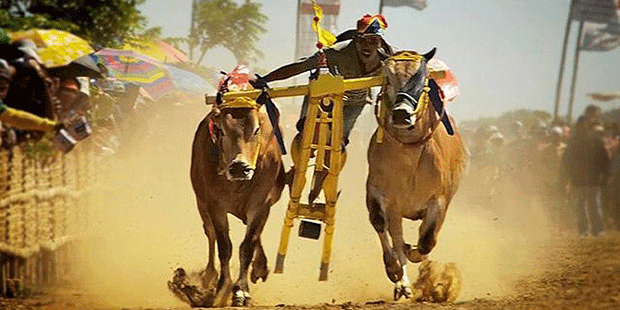
The uniqueness of "Karapan Sapi" (english: bull race) is the interesting one for the most tourists when they come to Madura island. This festival can't be found in other places in Indonesia even in the world. The excitement of this festival is so amazing when the race accompanied by traditional Gamelan named "saronen" and also the audience shouts, which is encouraging the cows where they're racing quickly.

Karapan sapi is a race for a couple of bulls ridden by jockey called "tukang tongko". The rider stand on what so-called "kaleles", which then drawn by the bulls. The jockey stand to control the bulls at high speed along the 100 meters of race track for 10 seconds to 1 minute.

Karapan Sapi isn't just an ordinary cow race. A team made to set strategies and tactics. The team consists of : "tukang tongko" the cow rider ; tukang tambeng, which holds the cows before being released ; tukang gettak which spurs the cows in order to run faster and straight ; tukang tonja, which leads the cows to obey to their trainer ; tukang gubra, the supporters who support by their whoop to encourage the cows from the edge of the field.

Before the race started, a pair of bulls will walk around the field race accompanied by traditional music, Saronen. Saronen are music and dance which accompany a pair of cows before they race in the race. The sounds are dominated by trumpet and series of unique gongs, which is played by a group of men with colorful costumes typical of Madura. All bulls will be herded into the race field before the race started, those bulls will surround the field while they use unique costumes and unique accessories on their necks so the people will know the differences. After the parade ends, costumes and accessories will be released from the bulls. Only accessories which aren't harming the bull's movement still placed and not released.

The bulls which are contested, previously drink intoxicating drinks (Indonesian: arak) and then they're released into the race field. Arak used to make the bulls run faster than usual. The fastest time which has been recorded is about nine seconds for the distance more than 100 meters. The bulls which are contested are selected bulls and usually the price is so expensive, around hundreds million rupiah.

The bull race is held in various places in Madura on the end of July until October. This race is started at the sub-district and regency levels and the final race is national bull race or we call it "Gubeng" held on the end of September or October in Pamekasan and compete for President's Cup. When the final race comes, around 100 bulls will surround the city with complete costumes and unique accessories and the people also the tourists  are willing by waiting for their comings though the weather is dry or rainy.

Here's a video you can wacth about Karapan Sapi. Take a little time to watch and enjoy it :D


When the race held, the race divided into 3 round matches. The first round is about determining the winner group and the loser group. The second round is about determining the winner of the loser group. The last round is about determining the winner of the winner group. The President's Cup is given only for the winner from the winner group. 

The origin of Karapan Sapi according to folklore of Madura is started by a muslim scholar named Syeikh Ahmad Baidawi, which was known as Prince Katandur, the son of Prince Pakaos, grandson of Sunan Kudus. In addition to spread Islam, Prince Katandur also expert in planting, farming, and gardening. He taught the local people how to plow the ground (rice field) which called as "nanggala" or "salaga" where use two bamboos drawn by two cows.  

Gradually, many farmers used cows to plow their rice field and at the same time, the farmers made a competition. The competition was about who will finish in plowing the rice field faster. In the end, the competition turned into a kind of racing sport with two bulls called Karapan Sapi. 

Madura Island is located in the offshore of East Java, exactly in the north east of East Java. You can visit it through Suramadu Bridge or by using ferry ship for 1,5 hours. Also, you can use public transportation or rental cars or even motorcycle from Surabaya to visit Madura. Be careful of strong winds which come from the left or right side of Suramadu Bridge. It's better if you don't use motorcycle for your safety. If you can't, you can ask the bridge officer there about how the weather is or how the wind speed is. They will allow you to go through the bridge if the weather or the wind speed is normal. Please ride your motorcycle slowly while you cross the bridge. Sometimes strong winds come suddenly from the left or right side of the bridge. 

More information about Karapan Sapi, please visit Wonderful Indonesia
Thankyou for your visit :D

Monday, July 7, 2014

Keris : A powerful relic weapon from Indonesia


Keris is a short traditional weapon of Malay used since 600 years ago. The weapon is quite unique in Malay world  and it's available around Malay region such as Malaysia, Indonesia, Singapore, South Thailand, South Philippines (Mindanao) and Brunei. Keris is used for self-defense and also as the greatness equipment for the king. It's also as a symbol of the greatness of Malay people. The most famous keris is Keris Taming Sari which is used by Hang Tuah, a famous Malay hero.

Keris originally from Java islands and the ancient keris has been used between 9th century to 14th century. This weapon consist of 3 parts : the eye of keris, the head, and the cover. Keris is often associated with a mystical power by the Malay people in the past. Somepeople believe that keris has its own power. Keris, according to Malay culture must be kept well by making a sacred ceremony for it on certain days such as in Thursday night. Another ways like pouring the citrus (lime) liquid into the keris as the way to keep the purity of its metal. In Central Java, generally, the groom in marriage ceremonies usually use complete javanese costume with keris placed in his waist. Why the groom uses keris as in a wedding party? Keris, in Javanese people is a symbol of manliness and superiority and sometimes when the groom can't attend the ceremony because of certain causes, he will be represented by a keris. Keris also as a symbol of the power.

Actually, the view of Keris started from the belief of the Javanese in the past. The source of the existence of the living creatures in the earth is come from agrarian philosophy, which is the merging of the elements of man and woman. In this world, God creates the living creatures (human, animals, or vegetation) in two different sex, a man and a woman. The belief on agrarian philosophy was very fundamental in the environment of Keraton (the term for a king's palace in javanese) such as Keraton Kasunanan Surakarta, Keraton Yogyakarta, and many more. At first, the belief is originally from Hinduism, which is followed by the Javanese in the past. Also appear some beliefs about Ibu Pertiwi - Bapa Angkasa as an integral part of javanese philosophy.

The belief of agrarian philosophy in the Javanese society is realized in the form of Kirab Pusaka (A ceremony for the relic items (include weapons) which have magical power), which is held before the date of one Suro in Javanese calendar. The relic items usually are sharp weapons like spear, big knife named "Bendho" and many more. The parade of the prime relic weapons of Keraton walk surrounding the complex of Keraton and at the same time, the carriers and the followers focusing their mind and feelings also praise and invoke to the Lord of the universe, invoke the Lord's protection, happiness, inner and outer well-being.

Here's a video about Kirab Pusaka. Wacth and enjoy it :D

The main function of the sharp relic weapons in the past were for self-defense against wild animal and enemy's attack or to kill the enemy. But at this time, the main function of it has changed. In the peace time, sometimes people use keris as a costume complement for the great ceremonies or in wedding party. So, Keris will be decorated with diamonds in the head part of keris. Even its cover made of beautiful carved metal, coated with gold as a pride. Keris also become one of high precious comodity.

The relic weapons isn't just about keris and javanese spear but also almost all regions in Indonesia have famous relic weapons such as Rencong from Aceh, Badik from Makasar, Trident, Balinese keris, and so on.

When Sultan Agung and his army attacked to Kadipaten Pati by the war title ; Garudha Nglayang, Supit Urang, Wukir Jaladri, or Dirada Meta, the soldiers who accompanied him used spears where it's carved with image of Kalacakra. The power of those relic weapons wasn't only from its materials like steel, iron, nickle, even it's mixed with meteorite stones but also its making was accompanied with prayers to God with a spiritual effort from the master. The spiritual power of God was believed by the people as powerful magical power so it will affect the opponents become more weak and terrified.

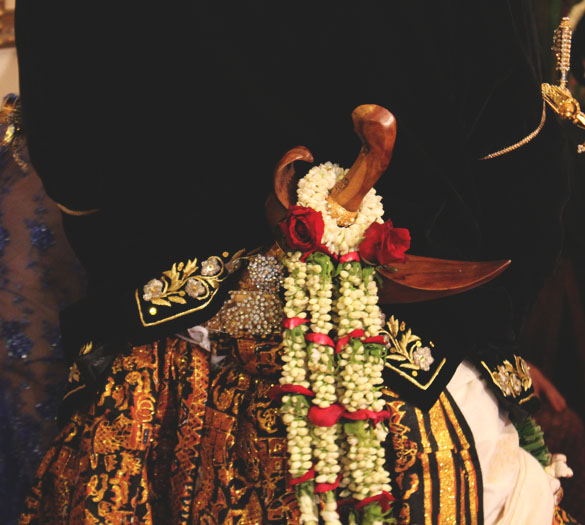
Once there was an opinion based on scientific test towards sacred keris and the result said that it expended invisible energy. Interestingly, keris which is used as a complement of javanese traditional groom dress is completed with the garland of roses and jasmines placed in the head of keris. It's not just a garnish, but it has meaning to remind the people not to be emotionally, wild, anger, act arbitrarily like Harya Penangsang's character.

The relation with Arya Penangsang is when Aryo Penangsang made war against Sutawijaya, because of Harya Penangsang was an anger, emotional, and uncontrolled, his stomach was punctured by Sutawijaya with the spear of Kyai Plered. His intestine already out of his torn stomach. In the condition wanted to revenge with full of rage, then he tied his intestine into the head of keris on his waist. He continuously attacked the enemy. At the time, when Arya Penangsang wanted to stab his enemy with keris of Setan Kober placed on his waist, when he unsheathe it, his intestine cut off by the eye of his keris. Arya Penangsang died in a great war that killed thousands soldiers. From that war, the idea of placing garland of flowers on the head of keris appear.

Relic weapons such as spear, keris, and many more, will inflict the incredible courage sense to its owner. The people know it as "PIYANDEL" means the enhancer of self-confidence, even the relic keris or relic spear, which is given by the King into royal nobleman contains the trust of the King. However, when the King's trust is tampered with the bad attitude of the royal nobleman, the relic keris can be asked back by the King.

The relation between keris with its cover especially by the Javanese is interpreted as intimate relationship, fused to reach the harmony of life in the world. This interpretation gave rise to a famous philosophy, "Manunggaling Kawula Gusti", unity between courtiers and the King, the unity between human and its creator, the unity between the people and its leader, makes life always more peaceful, happy, healthy and prosperous. In addition of mutual respect between each other, also have to know yourself in work according to portions and each function correctly. Nevertheless, the meanings contained in those relic weapons as art objects of national culture, which contains various aspects in the Javanese life today are threatened its development because of technology aspects is less enthused compared with legend and magical aspects.


The Recognition of Keris

After the recognition of wayang as world heritage in 2003, Keris has its turn on 25th November 2005 in Paris. The recognition of Keris as the world heritage is a fresh news in the midst of  adversity of Indonesia lately.

Keris, as well as Kabuki (Japanese theatre), and traditional show from India, Ramlila, which explain about Ramayana epic. Samba from Brazil and Mak Yong, a traditional form of dance-drama from Malay. They're still exist until now

Actually, there're 64 cultural heritages, which are proposed from several countries to be recognized as world heritage by the UNESCO. However, after going through the valuation from several juries which convene on 20 to 24 November 2005 where Putri Basma binti Talal from Jordania is choosen as the chairman, only 43 objects recognized as masterpieces of the oral and intangible heritage of humanity. Meanwhile, masterpieces which recognized by UNESCO from 2001 and 2003, include wayang, are about 47 in number. Thus, the total of world heritage masterpieces which recognized by UNESCO are 90 in number. Estimated, around hundred thousands dollars a year will be used to preserve Keris and Wayang.

"Through the momentum of the recognition from UNESCO, we should rearranging the view about Keris", Ir Haryono Haryoguritno said. He's one of the Keris expert, which lead research team in field and discussion for a year since August, 2004.

After attending Keris communities in Central Java, East Java, Madura, Bali, & Lombok, Haryono which accompanied by Waluyo Wijayanto from the association of keris enthusiast of Damartaji and an Indonesian lived in Australia, Gaura Mancacaritadipura, summarize their research in a thick report for UNESCO. Also submitted two films about keris culture with durations of 10 minutes and 120 minutes. While today, most mainstream media more often expose "negative views", which related to Keris, according to Haryono, Indonesia should realize that the world today appreciates the ancestral heritage of Indonesian, which in every opportunities always be ignored by Indonesian itself. "Keris nowadays, described in television and it can fly, shine, and closely with shamanism world" Waluyo said. Also layman, which is always connecting Keris with Mpu Gandring and Ken Arok where he killed Mpu Gandring through Keris he booked. Mpu Gandring cursed Keris he made, which actually unfinished and it cursed 7 offsprings of Ken Arok, include Ken Arok itself.

We have to admit that we're very far behind with Singapore and this country has used Keris as identity pride on their airline services. The airlines of this country like Singapore Airlines used name of Keris on their VIP waiting room, named Keris Lounge. Also KrisFlyer, a service for the one who often use airline services. KrisMagazine for their magazine name, and KrisShop for the service of souvenir sale in the plane.

Saturday, June 14, 2014

Angklung : A Valuable Philosophy from West Java


For the majority of Indonesian, bamboo is a natural component that can't be separated in daily life. From the birth to the death, bamboo always geta the place. Household appliances, building materials and many more are some goods made from bamboo. Even one of the local culinary named "rebung" is made of young bamboo shoots.


Bamboo also is a tool and symbol of the struggle of Indonesian independence against imperialist which known as "Bambu Runcing". Nowadays, bamboo is popular after it has been used by Indonesian artist to make several traditional music instruments such as : suling (flute), calung, munsang, clempung, rengkong, and the special one which has been listed as world cultural heritage also recognized by UNESCO in 2010, Angklung. 

Angklung is a traditional music instrument made from pieces of bamboo. This angklung consist of 2 until 4 tubes which is assembled into one by using rattan ropes. The bamboo tubes are carved and cut nicely by the professional wood carver to get specific tone when the bamboo frame shaken.

Each angklungs make different chords, so several players have to work together to make beautiful melodies. It has been known for a long time ago in several territories in Indonesia, especially in West Java, East Java, Bali, and Central Java

Word "Angklung" comes from sundanese, 'angkleung-angkleungan' means the motion of angklung player, also it comes from the sound of angklung itself, 'klung'. Actually, Angklung is the further development of calung, a Bamboo tube that got hit, meanwhile the angklung is bamboo tubes that got shaken, so it only generates one tone for each instrument.

In the past Sundanese, angklung has a function in religious ritual such as inviting the Goddess of Prosperity, Sri, to come down into the earth, bring and give the fertility of the rice field. Until now, in some villages we still can find ceremonies which use "angklung buhun" for traditional activities like harvest party, pesta panen, ngaseuk pare, nginebkeun pare, ngampihkeun pare, seren taun, nadran, helaran, turun bumi, and sedekah bumi. 

Even though, generally, it's identified as a musical instrument from Sundanese, but the origin of angklung itself may be more extensive and older. One of reference that can be found in the second edition of the bulletin of Sama Nyata in 2009 which is published by the Ministry of Culture and Tourism mentioned that Dr.Groneman on his research, angklung has become a favorite art attraction in whole Nusantara even before the first Hindu kingdom exist. Meanwhile, according to Kunst Yaap said that angklung exists also in South Sumatra and Kalimantan, Lampung, East Java, and Central Java. In Bali, angklung is played for several rituals such as cremation ceremony, ngaben and many more. Even, some claim that angklung comes from Balinese word, 'angka' and 'paru-paru' means complete tunes.
Baduy and Kanekes village

In West Java, angklung has been played since 7th century. Baduy from Kanekes village still play traditional angklung called 'angklung buhun' in several traditional ceremonies. Angklung of Baduy consist of 4 parts : king - king, indo, panempas, dan gong - gong. 

In the border between Cirebon and Indramayu, exactly in Bungko village, there is another kind of angklung named 'Angklung bungko'. Believed that Angklung bungko is around 600 years old and it's still maintained even though it's not used anymore. Angklung bungko was created by Ki Gede Bungko, a religious leader which use it as a media of missionary endeavor of Islam.

There's also a story from the harvest failure in Cipining village, Bogor which then become the origin of Angklung gubrag. Said that the village is threatened of famine because of the failure of harvest. The village people believe that the disaster happened because of the anger of Godess Sri. Then, The local people made a ritual with the art show to invite back Godess Sri to come down into the earth and give her blessings for the fertility of rice field. However, it was not succeed. One day later a young man named Mukhtar and his friends went to Mount Cirangsad to tear down the bamboo, type of gambang surat. After they meditated for 40 days, they came back to the village and made angklung from the bamboo they got. The next, the young men teach the villagers to play angklung. In the end, the village held a ceremony accompanied by music from angklung. The ceremony was succeed and effective and made the rice field grow well. The people believed the angklung sounds made Goddess Sri came down from the heaven and blessed all their harvest. Therefore, the angklung was named with 'gubrag' means fall or go down. The Angklung Gubrag always fill every traditional ceremony in Cipining village, since the time.

In 1938, a teacher from Hollandsch Inlandsche School (HIS), Daeng Soetigna, in Kuningan, West Java succeeded to create a kind of angklung with modern music tones. At first, Angklung only has pentatonic tones. In 1938, Daeng Soetigna modified the Angklung sound from pentatonic tones into diatonic tones. This Angklung known as Angklung Daeng or Padaeng Angklung. Since the time, Angklung starts to be known internationally where it has been staged in Asian-African Conference at Bandung in 1955. Angklung at this time is more often shown in orchestra and more often used as school musical instrument.

Daeng Soetigna died in 1984. Then Udjo Ngalagena as his student and assistant tried to conserve and develop Angklung, further. Udjo Ngalagena which usually called as Mang Udjo and his wife, Uum Sumiati, succeeded develop Angklung become more interesting. At the end, they build Saung Angklung Udjo. 

Saung Angklung Udjo is a place where Angklung art develop dynamically and amaze the world. It is not only about playing traditional instrument but also playing popular modern songs. Saung Angklung Udjo is a studio of performances of traditional art, the educational laboratory and tourism object from West Java at once. This place shows the power of mutual aid between the people. Saung Angklung Udjo is likened as an cultural oasis in the middle of dense settlements, fill the ground with an area of 1,2 hectare. It is about 42 countries know Angklung day. There're so many demand of Angklung from Netherland, also South Korea, even in South Korea, it has been introduced since elementary school level. Saung Angklung Udjo itseldf is located in Jalan Padasuka 118, Bandung. Here you can watch the show of traditional art of Sundanese and learn more about Angklung/

Besides as traditional musical instrument, it also has philosophy value. Angklung symbolize the life of human who always need each other. The big and small tube from the bamboo row describe the development of the life of mankind. The small one describe each person has a dream and desire to be a great person which is symbolized by the big tube. When the Angklung is shaken, all tubes create harmony which describe the life as it should be.

Some of you must be curious of what and how Angklung is. Here is a video I take from YouTube about the show of Angklung by PPI Tainan on "Indonesia Culture Day 2010 - The Exotic Of Indonesia". Enjoy it ! :D 


More information about Angklung, please visit : Wonderful Indonesia
Thankyou for your visit.

Enter your email address:

Delivered by FeedBurner